I don't pick a side. I break the work into phases so nobody is blocked and we never ship something that might misbehave in front of a customer.
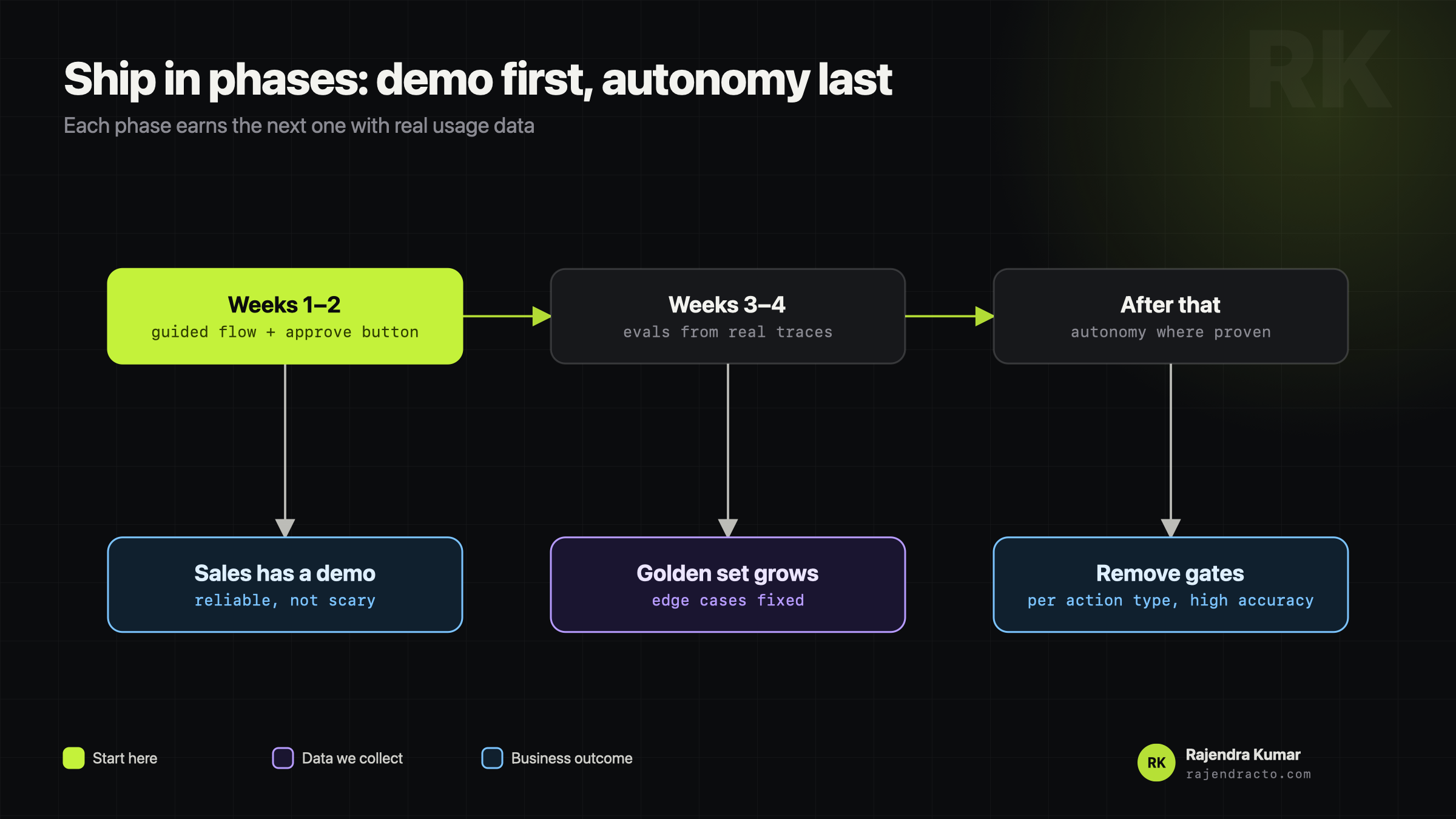
The phases
- Weeks 1–2: guided version. A fixed workflow with a human approval button on every action. Sales gets a working, reliable demo right away, and we start collecting real usage traces.
- Weeks 3–4: harden. Use those traces to fix edge cases and build the automated eval suite.
- After that: autonomy, one action at a time. Remove the approval gate only for the specific action types where the numbers show consistently high accuracy. Risky actions, like money movement, may keep a human forever, and that's fine.
Why everyone ends up happy
Sales gets a demo in two weeks. Product gets the autonomous feature, built on evidence instead of hope. And engineering doesn't ship an unpredictable liability. The approval button isn't a weakness in a demo either. For finance and operations buyers it's usually a selling point.
Key takeaways
- 01A guided flow with approvals is a great first demo.
- 02Real traces become your test suite.
- 03Autonomy is earned per action type.
Product thinkingAI agentsStakeholder managementDeliveryInterview prep