AI coding tools are great for speed. But if everyone blindly accepts AI code, the codebase fills up with duplicate logic, invented dependencies and quiet security holes. My rule: AI writes the first draft, the engineer owns the PR.
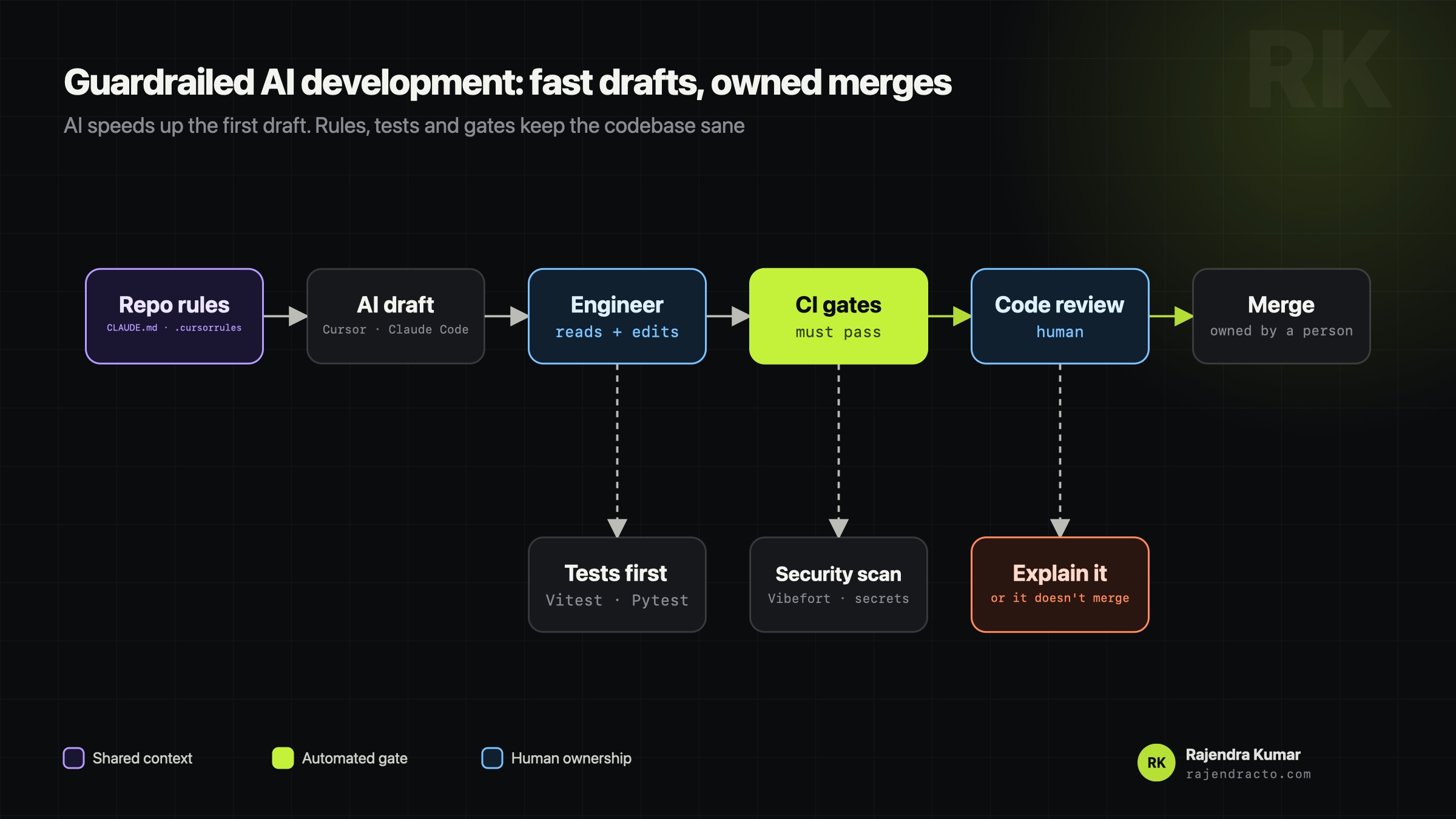
What I put in place
- Shared rule files in the repo (
CLAUDE.md,.cursorrulesand similar), so the assistant follows our folder structure, naming, approved libraries and patterns instead of inventing new ones. - Tests first. Engineers write or at least review the tests (Vitest, Pytest) before accepting generated code. Edge cases are where AI code breaks.
- Automated gates in CI. Static analysis, dependency audit, secret scanning. Nothing gets to human review until these pass.
- Small PRs. A 2,000-line AI-generated PR can't be reviewed properly, so it isn't accepted.
- Explain it or it doesn't merge. In review, if the author can't explain how a block works, it goes back.
Why I built Vibefort
I kept seeing the same problems in AI-built apps: API keys in browser code, database tables without row-level security, committed .env files, no tests and no CI. So I built Vibefort, a CLI that scans a repo for exactly these (npx vibefort scan ./my-app). It's the kind of check I want running on every AI-assisted PR.
Key takeaways
- 01Give the AI your rules, in the repo.
- 02CI gates before human review, every time.
- 03The person who merges it owns it.
Vibe codingAI coding assistantsCode reviewCI/CDVibefortInterview prep